

Apple's privacy-focused doorbell cam
Amazon and Google failed the public with their privacy-stealing doorbell cameras. And that's an opportunity for Apple.

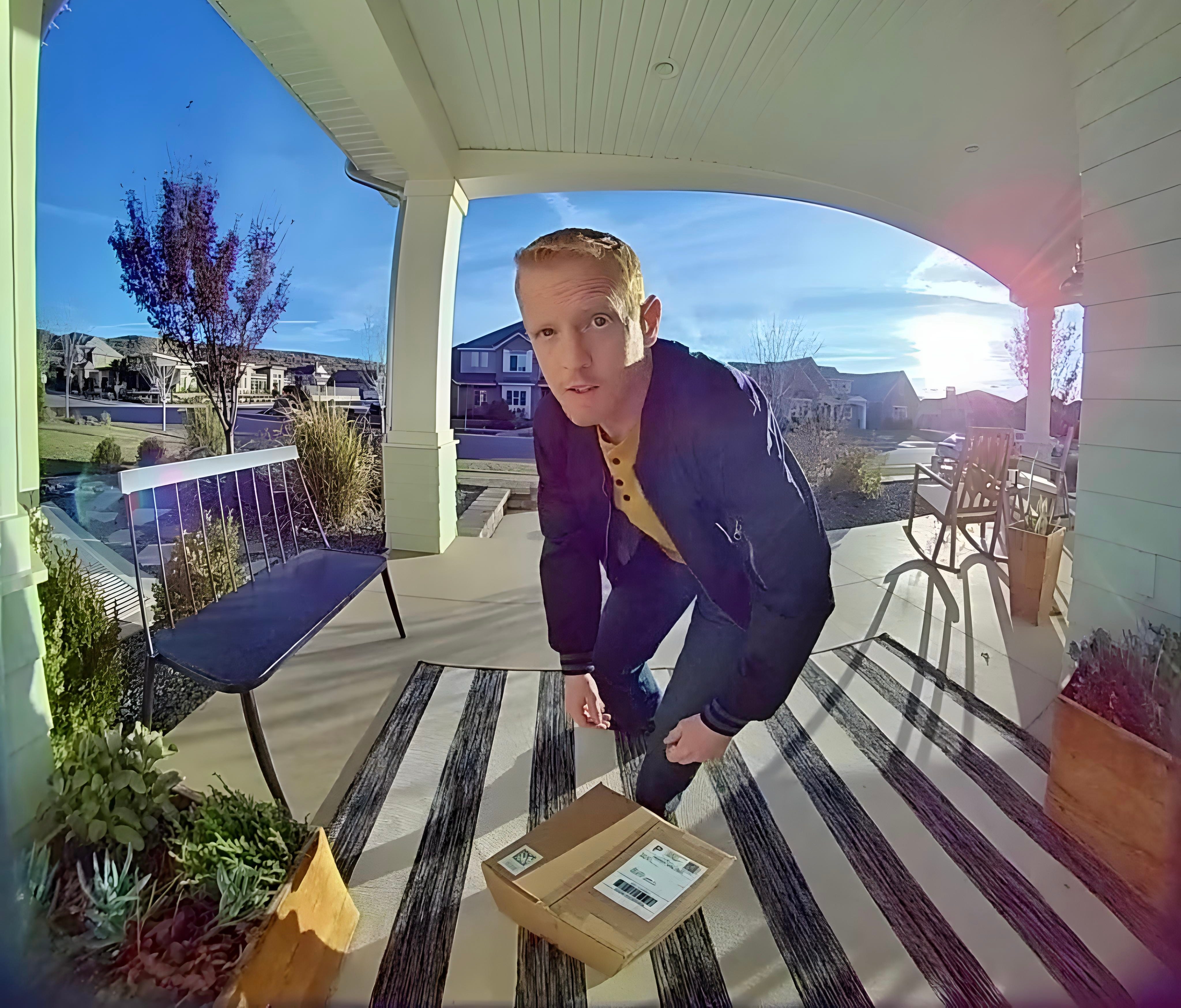
Classic 20th-century science fiction predicted cautionary dystopian scenarios involving all-powerful governments pwning citizens in various ways. Now that the future is here, we’re pwning ourselves.
Yevgeny Zamyatin’s 1924 novel We imagined a “One State” that forced people to live in glass apartments to erase privacy. Now, everybody voluntarily exposes their lives through smartphone cameras and social media.
The 1997 movie Gattaca showed a future society where institutions routinely stole DNA samples. Now, millions of people spit into a tube and mail it to companies like 23andMe, voluntarily handing over their DNA data, which is entered into a central database and sometimes made available to the police.
Ray Bradbury’s 1953 novel Fahrenheit 451 focused on a government that burned books and encouraged people to wear “Seashell” radios in their ears to block out reality. Today, people increasingly choose to not read books. And millions wear noise-canceling earbuds to block the sound of the world around them.
But the best example is that George Orwell’s 1984 depicted a government that forced citizens to keep “telescreens” in their homes to monitor their every move. The government didn’t do that, but just about everyone has webcams, smartphone cameras, video doorbells, or security cams — and sometimes all of them — with much of that surveillance available to police, governments and corporations.
In a famous 1984 Super Bowl ad, Apple said the company would prevent 1984 from being 1984.
That ad was brilliant bullshit. But now they’re doing it for real.
We learned more this morning about Apple’s coming smart video doorbell and smart lock product first reported by Bloomberg’s Mark Gurman in his “Power On” newsletter on December 22, 2024.
The device will feature iPhone-like FaceID to recognize faces. When you walk up to your own front door, a smart lock will unlock the door (nobody outside Apple knows whether Apple will also make the lock or partner with other companies). Reports say the FaceID will be smart enough to know the difference between an actual face and a picture of a face.
What we learned today is that the product is part of a new push by Apple further into home automation, a push that includes a new “home hub” smart display and an indoor security camera or two.
We also learned that Apple will (smartly) focus on privacy as a selling point in the context of Ring and Nest failing hard on the privacy front.
Amazon, which owns Ring, last week canceled its partnership with Flock, a tech company that works with police to help solve crimes. This decision came just days after a controversial Super Bowl ad sparked a debate about neighborhood surveillance. (During Super Bowl LX February 8, Amazon ran a Ring commercial intending to be cute. The ad showed a young girl upset over a lost puppy, a problem solved by a new feature called “Search Party,” in which an uploaded picture of the dog, plus AI, found the dog by searching all nearby Ring video feeds. Critics called it propaganda for mass surveillance, because it demonstrated a dystopian total surveillance in the control of Amazon, a company nobody trusts. This was just the latest controversy demonstrating Amazon’s carelessness around privacy.)
Google’s Nest doorbell has also been in the news lately. The FBI was able to get video footage from a Google Nest doorbell connected to the disappearance of Nancy Guthrie. That sounds like a good thing. But it turns out that the Nest camera was disabled and was not supposed to be recording or retaining video.
Apple’s reputation for protecting user privacy, especially compared to Amazon, is well founded. The reports suggest that Apple will use its custom Secure Enclave chip to encrypt face recognition data. Apple’s Secure Enclave system uses a dedicated, isolated hardware coprocessor for data instead of uploading it to the cloud or making it available to hackers or police.
Apple entering the video doorbell racket on privacy features mirrors the company’s foray into trackers in April 2021.
[Note: You’re reading the free version of Machine Society, which does not include the full column. To read everything in every issue, sign up for the paid version for $5 per month, or (for a limited time only) join my “marketing department” to get the paid version free.]

More from Mike
Machine Society, Computerworld, Superintelligent, TWiT, blog, The Gastronomad Experience, Book, Bluesky, Reddit, Notes, Mastodon, Threads, X, Instagram, Flickr, Facebook, and Linkedin!
What Bradbury foresaw that Orwell missed is that the surveillance state wouldn't be forced on people top down, but that they would choose it. The Government only started burning books because their constituents demanded it.
What strikes me most is the way this piece reframes surveillance not as something imposed, but as something invited—woven into daily life through convenience, safety, and habit. That shift feels deeply connected to ideas I explored in my essay The Physics of Closeness, where technological intimacy subtly redraws the distance between observer and observed. The devices meant to protect or assist us also compress the private space in which identity once existed unmeasured.
Apple’s privacy-centered approach may offer a more respectful architecture for that closeness, but the larger trajectory remains: our environments are becoming perceptive systems. The real question is no longer whether technology watches, but how consciously we choose the terms of that awareness—and whether we can preserve meaning, autonomy, and genuine human distance inside an increasingly intelligent world.
https://serenityfinch.substack.com/p/the-physics-of-closeness